Recognizing Organization Company Frameworks and Operations
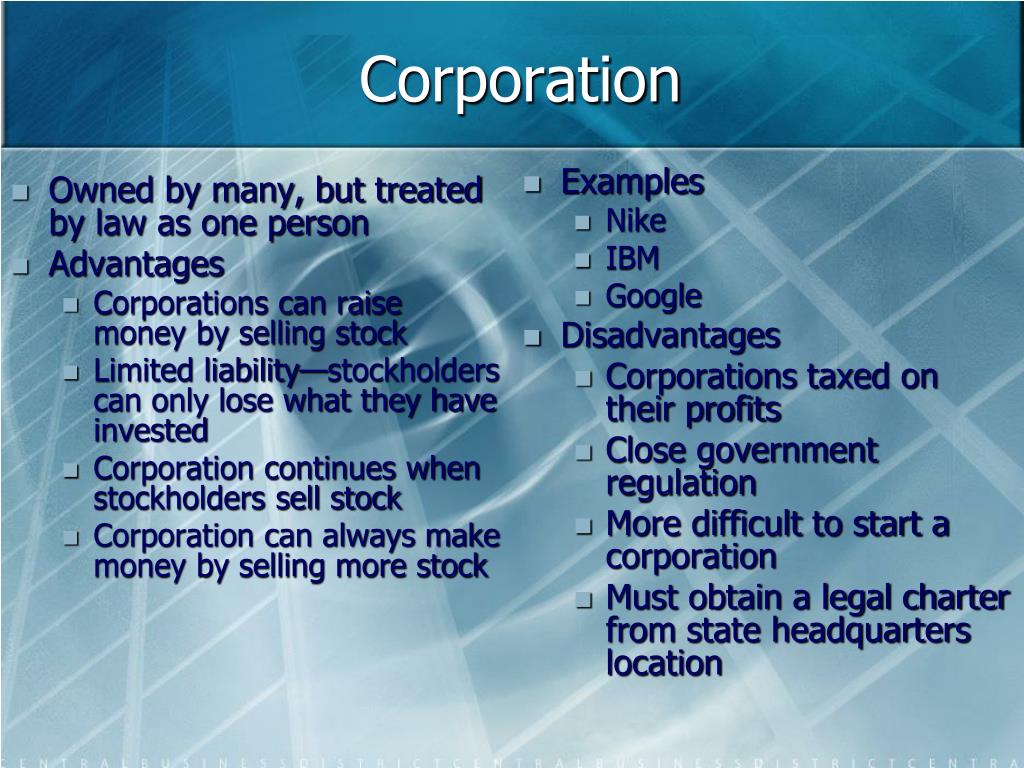
A business corporation is a kind of entity that is recognized as separate from its proprietors, that are referred to as shareholders. This splitting up is essential as it offers the investors with minimal liability, indicating their personal possessions are safeguarded from the corporation's financial debts and legal actions. Corporations are produced under the legislations of a specific state and can include several individuals. Setting up a company involves numerous steps including the declaring of an “Articles of Unification” with the appropriate state authority, and the creation of bylaws that govern the company's operations. One of the specifying functions of a corporation is its capacity to issue supply, which can be an essential device for raising capital. Source Webpage can spend money in the firm and in return, receive a symmetrical ownership in the kind of stocks.
As soon as developed, a corporation needs to follow a number of governing demands, including holding routine meetings, maintaining in-depth records, and sending annual reports. These demands aid guarantee transparency and accountability, shielding the passions of both the shareholders and the public. The framework of a corporation commonly includes a board of officers and directors. The board of directors, chosen by the shareholders, oversees the significant policies and decisions of the corporation and designates the policemans who handle the daily operations. This ordered structure is crucial as it aids in marking responsibilities and making sure reliable administration. Moreover, firms go through company tax obligations on their revenues, and they should adhere to both state and federal policies which can differ extensively depending on the market and place of the company. Comprehending these regulations and efficiently handling a firm can lead to considerable development and productivity.
Recognizing the Framework and Feature of Business Corporations
Business companies, as official entities, play a pivotal role in the modern-day economic climate by uniting sources and initiatives to accomplish common goals, largely producing profit for their shareholders. These entities are lawfully acknowledged and offer a framework where service activities can be performed efficiently and with limited obligation for the proprietors. At the heart of a company is the concept of limited obligation, which means that the personal properties of shareholders are protected; they are only liable for their investment in the business. This fundamental characteristic not just urges financial investment and risk-taking but additionally promotes the pooling of big quantities of funding required for significant enterprises.
Strategic Importance of Service Firm Structuring
Understanding the critical importance of structuring a service company properly is essential for long-term success and strength in the open market landscape. One of the key aspects in this process is determining one of the most beneficial legal framework that aligns with the firm's goals and functional needs. Whether a business choose a C firm, S company, or a Minimal Responsibility Business (LLC), each selection comes with distinct tax obligation implications, responsibility problems, and versatility in administration and ownership that can profoundly impact the corporation's future. Founders should think about how these frameworks can influence everything from bring in financial investment to the convenience of future company developments or mergers. A well-balanced company structure can enhance integrity with stakeholders and give a strong foundation for establishing clear lines of authority and obligation. This is especially vital in bigger organizations where the delegation of roles and hierarchical coverage systems ensure efficiency and quality in decision-making procedures. Moreover, critical structuring additionally enables corporations to better take care of dangers by clearly defining liability and shielding personal properties of the owners from business debts or claims. Ultimately, a smartly designed company structure is not simply a legal demand however a strategic device that can be used to leverage competitive benefit, adjust to market adjustments, and pursue lasting development purposes with greater dexterity and emphasis.
Strategic Administration and Corporate Governance in Organization Companies
In modern organization companies, calculated management and corporate governance play pivotal roles in forming the company's instructions and guaranteeing its compliance with moral standards and lawful regulations. Strategic administration refers to the organized preparation, analysis, and implementation of activities focused on safeguarding a competitive advantage in the marketplace. It includes a deep understanding of the marketplace dynamics, customer behavior, and technical advancements to make enlightened choices that steer the firm towards long-term success and sustainability. Corporate governance, on the other hand, includes the mechanisms, procedures, and connections whereby companies are controlled and directed. It focuses on balancing the interests of a business's lots of stakeholders, such as investors, management, clients, distributors, financiers, federal government, and the area. While calculated monitoring is worried about the functional elements of a company, corporate administration take care of the framework within which these procedures are carried out, making certain openness, accountability, and justness in business tasks. Together, these two techniques make certain that a company not just thrives in a competitive environment however additionally keeps a robust ethical position that strengthens its integrity and durability in the marketplace. The blend of calculated monitoring and company governance has become increasingly pertinent in the electronic age, where quick technical changes can significantly alter affordable landscapes and customer expectations, requiring active reactions and foresighted administration techniques. This harmony is critical not just for accomplishing business goals yet additionally for cultivating a corporate culture that prioritizes stability and social duty.
Strategic Monitoring and Competitive Advantage in Organization Companies
In the dynamic ball of business, corporations deal with the constant difficulty of keeping an one-upmanship to ensure lasting growth and profitability. Strategic monitoring arises as a critical device, empowering business to synergize their sources, abilities, and core expertises to exceed opponents. This involves not only the solution yet likewise the execution of forward-thinking strategies that are aligned with the company's long-lasting purposes and the volatile nature of market demands. A significant aspect of critical monitoring is the evaluation of outside market conditions, including competitor motions, technical developments, and governing modifications, which can substantially change competitive landscapes. By participating in thorough ecological scanning, companies are better furnished to anticipate modifications and adapt their methods accordingly. Notably, hkex listed company profile of innovation in business approach can not be downplayed. Companies that pioneer brand-new innovations, organization versions, or market methods can establish industry criteria, leaving competitors to comply with in their wake. The growing of a solid corporate society that welcomes change and promotes technology is important for the successful execution of tactical campaigns. Fundamentally, company profile description of tactical monitoring and the search of development offer as foundation aspects that make it possible for businesses to protect a competitive advantage and browse the intricacies of the international market.